

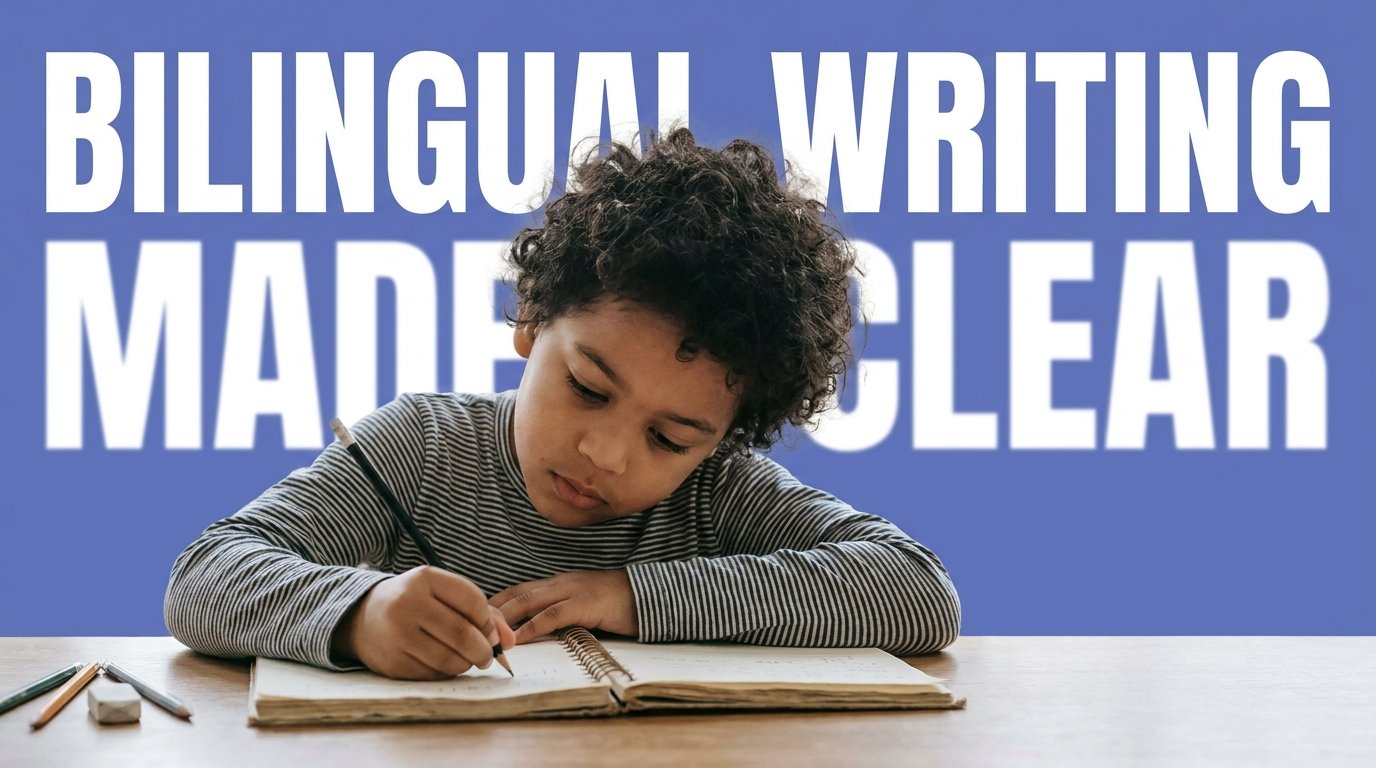
Writing a strong essay is a skill, not a talent — and that’s true in both English and French. Most kids who struggle aren’t lacking ideas; they’re lacking structure. Once a child understands how to organize a thought clearly, the writing itself gets dramatically easier, in either language. Here’s how to help your child build that skill at home, plus when it’s worth bringing in structured support.
Why Kids Struggle With Essay Writing (In Either Language)
The most common problem isn’t grammar or vocabulary it’s structure. Kids often sit down with a blank page and try to write and organize their thoughts at the same time. That’s a lot to juggle for a developing writer. Once structure is handled first, the actual sentences come much more naturally.
This is exactly why bilingual writers sometimes feel stronger in one language than the other — it’s rarely about vocabulary alone. It’s usually about which language they’ve had more structured practice organizing ideas in.
5 Ways to Improve Essay Writing at Home
1. Separate planning from writing. Before your child writes a single sentence, have them jot down three or four bullet points answering: what’s the main idea, and what are two or three reasons or examples that support it? This single habit prevents the rambling, unfocused essays that frustrate both kids and parents.
2. Use the “explain it out loud first” trick. Ask your child to explain their essay topic to you verbally before writing it down. Kids almost always structure their thoughts better out loud than on paper. Writing then becomes transcription of an idea they’ve already organized, rather than inventing structure from scratch.
3. Read the essay backward, sentence by sentence, to check clarity. This sounds unusual, but it works. Reading from the last sentence to the first breaks the brain’s tendency to “autocorrect” awkward phrasing because it already knows what comes next. It’s one of the fastest ways to catch unclear sentences.
4. Build a simple, reusable essay skeleton. Give your child a repeatable structure they can lean on every time: an opening idea, two or three supporting points each with an example, and a closing thought that ties back to the opening. Once this becomes automatic, essay writing stops feeling like starting from zero every time.
5. Practice the same skill in both languages deliberately. If your child is bilingual, don’t treat English and French essay writing as two separate skills built independently. Have them plan an essay in one language, then explain the same structure in the other. This reinforces that strong writing is really about clear thinking the language is secondary.
Common Mistakes That Hold Kids Back
- Writing without a plan — leads to essays that wander or repeat the same point
- Translating word-for-word between languages — creates awkward phrasing instead of natural writing in either language
- Overcorrecting grammar before structure is solid — a well-organized essay with a few grammar mistakes reads better than a grammatically perfect essay with no clear point
- No consistent feedback loop — kids improve fastest when they get regular, specific feedback, not just a grade with no explanation
When Home Practice Isn’t Enough
Some kids genuinely benefit from more structured, expert-guided practice especially when they’re building skills in two languages at once, or when school feedback is too infrequent to drive real improvement. A tutor or structured writing program can give a child the consistent, specific feedback that’s hard to replicate at home, especially in a second language a parent may not be fully confident correcting themselves.
At The Future Leaders Club, our Write Like a Pro program and bilingual Math & French tutoring are built around exactly this — helping kids build genuine writing and communication skills in both English and French, with structured, expert-led feedback rather than just more homework.
Frequently Asked Questions
Should bilingual kids learn essay writing in both languages at the same time, or one first? Most kids benefit from building strong structural habits in whichever language they’re more comfortable in first, then transferring that same structure to the second language. Trying to build both from scratch simultaneously often slows progress in both.
How can I tell if my child’s essay writing problem is structure or language skill? Ask your child to explain their essay’s main point out loud in one sentence. If they can’t, the issue is structure, not vocabulary or grammar. If they can explain it clearly but the writing doesn’t reflect that clarity, the issue is more likely translation between thought and sentence.
What age should kids start formal essay writing practice? Basic structure (main idea + supporting points) can start around age 7–8. More formal essay writing, including thesis statements and multi-paragraph structure, typically develops well from ages 10 and up.
Does French essay writing require a different approach than English? The core skill organizing a clear argument — is the same in both languages. What differs is sentence structure, formal register, and certain stylistic conventions, which is why bilingual practice with a tutor familiar with both languages helps more than translating between them.
The Bottom Line
Strong essay writing comes from clear thinking, not memorized vocabulary or perfect grammar. Kids who learn to plan before they write in either language improve faster and retain that skill longer than kids who just write more without structure. With the right habits at home, or the right guided support, most kids surprise themselves with how much clearer their writing becomes.
Want expert, bilingual support for your child’s writing? Explore our Write Like a Pro program, or contact us to learn more.