
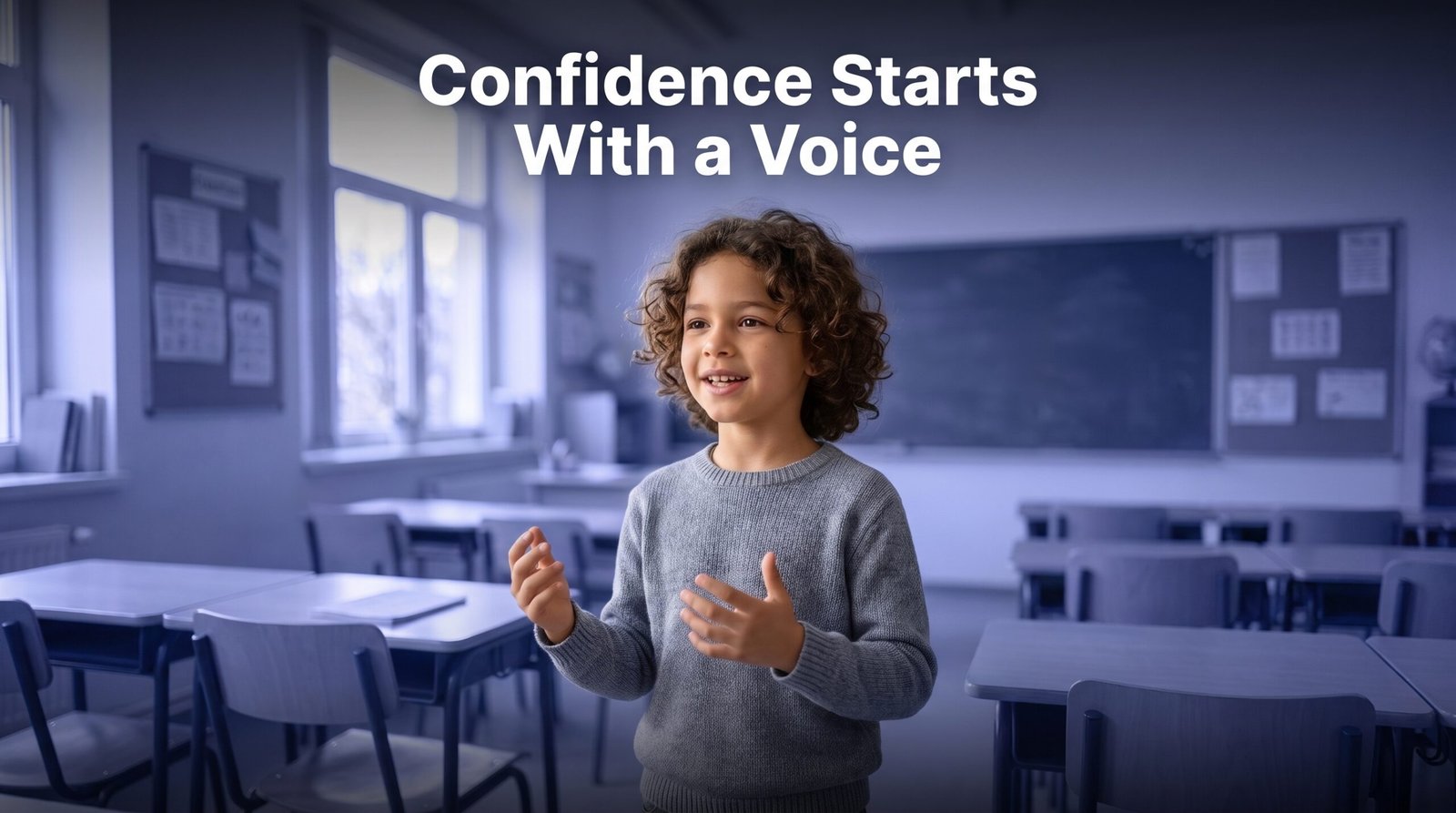
Ask most parents what they want for their child, and you’ll hear some version of the same wish list: confidence, good grades, real friendships, and the ability to handle whatever life throws at them. What a lot of parents don’t realize is that one skill quietly supports all four of those things at once public speaking.
It’s easy to think of public speaking as something reserved for debate teams or the occasional class presentation. In reality, it’s one of the most underrated life skills a child can develop, and its effects show up in places you wouldn’t expect: report cards, friendships, sports fields, and even how a child handles disappointment.
Here’s what actually happens when a child learns to speak up, and why it matters far beyond the classroom.
It Rewires How Kids Handle Fear
Every child who has ever frozen up before a class presentation knows the feeling sweaty palms, racing heart, mind going blank. That reaction isn’t really about public speaking. It’s about fear of judgment, and it’s one of the most common fears kids carry, right alongside things like failing a test or getting left out.
Public speaking practice puts kids in that uncomfortable spot on purpose, in a safe setting, again and again, until the fear loses its grip. Over time, the body learns that the “danger” isn’t real. That same calm-under-pressure skill transfers directly to test anxiety, tryouts, first days at a new school, and job interviews years down the road.
It Improves Academic Performance Not Just Grades in “Speaking” Subjects
There’s a reason strong communicators tend to do well across the board in school, not just in subjects like English or Drama. Explaining an idea out loud forces a child to actually understand it first. A student who can confidently explain how photosynthesis works, or walk through the steps of a math problem, has processed that information more deeply than one who can only recognize it on a multiple-choice test.
Teachers notice this too. Kids who can articulate their thinking participate more in class, ask better questions, and are more likely to raise their hand when they’re confused instead of quietly falling behind.
It Builds Real, Lasting Friendships
Confidence isn’t just useful on a stage it changes how kids show up socially. A child who’s comfortable expressing an opinion is more likely to introduce themselves to someone new, speak up in a group project, or say “actually, I disagree” without panicking about how it’ll be received.
Public speaking training often includes storytelling, active listening, and reading a room skills that translate directly into better conversations and, eventually, deeper friendships. Kids who struggle to express themselves often get overlooked in groups, not because they have less to offer, but because no one hears it.
It Teaches Resilience in a Low-Stakes Way
Every kid who does public speaking eventually stumbles over a word, forgets a line, or gets a question they don’t know how to answer. And that’s actually the point. Learning to recover gracefully in front of an audience to pause, breathe, and keep going instead of shutting down is resilience training in its purest form.
That skill doesn’t stay on the stage. It shows up when a child strikes out in baseball, gets a lower grade than expected, or faces criticism on a group project. Kids who’ve practiced “failing” small in front of a room tend to bounce back faster when life throws bigger setbacks their way.
It Prepares Them for a Future Where Communication Is the Real Currency
Fast forward ten or fifteen years, and nearly every meaningful opportunity a job interview, a college application interview, a pitch, a leadership role comes down to one thing: can this person clearly express their ideas and hold a room’s attention? Technical skills get people in the door, but communication is usually what gets them the job, the promotion, or the deal.
Starting early simply means kids arrive at those moments already comfortable, instead of learning it under pressure as adults.
How to Start Building This Skill at Home
The good news is that none of this requires a formal stage or a big audience. Kids build these skills through small, consistent reps: telling a story about their day at the dinner table, explaining a video game to a grandparent, or practicing a short “show and tell” in front of the family. What matters most is a safe, encouraging environment where speaking up feels normal, not scary.
For kids who want to go further, structured practice like a public speaking program designed specifically for children gives them a consistent space to build these skills with guidance, feedback, and peers going through the same thing.
Frequently Asked Questions
At what age should kids start learning public speaking? Most experts agree kids can start building basic public speaking skills as early as 5 or 6, through simple activities like show-and-tell or storytelling. Formal practice tends to work well starting around age 7 or 8, once a child can hold a short structured conversation.
Does public speaking really improve grades? Indirectly, yes. Kids who communicate well tend to participate more in class, understand material more deeply because they can explain it, and feel more comfortable asking for help — all of which support stronger academic performance.
My child is naturally shy. Can they still benefit from public speaking practice? Absolutely — often shy kids benefit the most. Public speaking practice isn’t about turning introverted kids into extroverts; it’s about giving every child the tools to express themselves confidently when it matters, at their own pace.
How is public speaking different from just being talkative? Being talkative is about volume of speech. Public speaking is a skill — it involves structure, clarity, listening, and reading an audience. A quiet child can be an excellent public speaker, and a chatty child isn’t automatically a confident one.
The Bottom Line
Public speaking isn’t just a nice extracurricular it’s a foundational skill that touches a child’s grades, friendships, confidence, and long-term success. The earlier kids start practicing, the more natural it becomes, and the more it shows up in every part of their life, not just when they’re standing in front of a room.
If you’re looking for a structured way to help your child build these skills with expert guidance, Future Leaders’ Public Speaking Program gives kids a supportive space to practice, grow, and find their voice.