

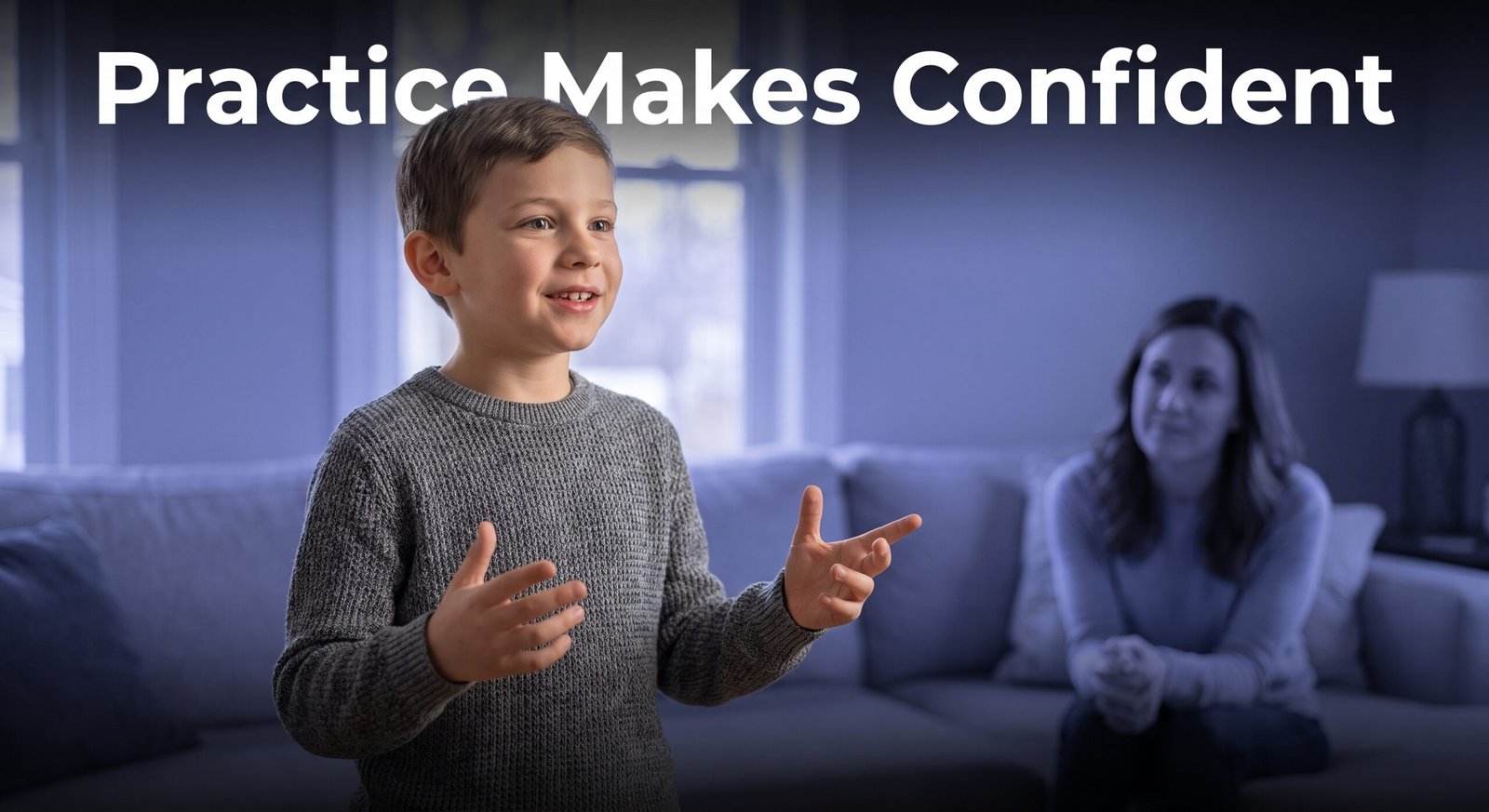
You don’t need a classroom, a coach, or a special program to start building a child’s public speaking confidence. Some of the most effective practice happens in the living room, five minutes at a time. Here are five simple exercises parents can use at home no equipment, no pressure, just repetition.
Why Home Practice Works So Well
Public speaking confidence isn’t built in one big moment. It’s built through dozens of small, low-stakes reps talking in front of a familiar audience, in a comfortable space, without the pressure of a grade or an audience of strangers. Home is actually the ideal place to start, because the stakes are low enough that a child can focus on the skill instead of the fear.
1. The One-Minute Topic Talk
Give your child a random, simple topic their favorite animal, a recent trip, what they’d do with a million dollars and have them talk about it for one full minute without stopping. Don’t correct them mid-talk. The goal isn’t polish, it’s building the muscle of sustaining a thought out loud without freezing up.
Why it works: Most kids’ instinct is to say a sentence and stop. Stretching that to a full minute forces them to expand on ideas, which is the foundation of real public speaking.
2. Mirror Practice
Have your child stand in front of a mirror and explain something simple how to make a sandwich, the rules of their favorite game while watching themselves talk. It feels awkward at first, but it’s one of the fastest ways to build self-awareness around posture, facial expression, and eye contact without a real audience watching.
Why it works: Kids often don’t realize what they look like while speaking. Seeing themselves removes the mystery and makes the physical side of speaking feel less foreign.
3. The “Explain It to Me Like I Don’t Know” Game
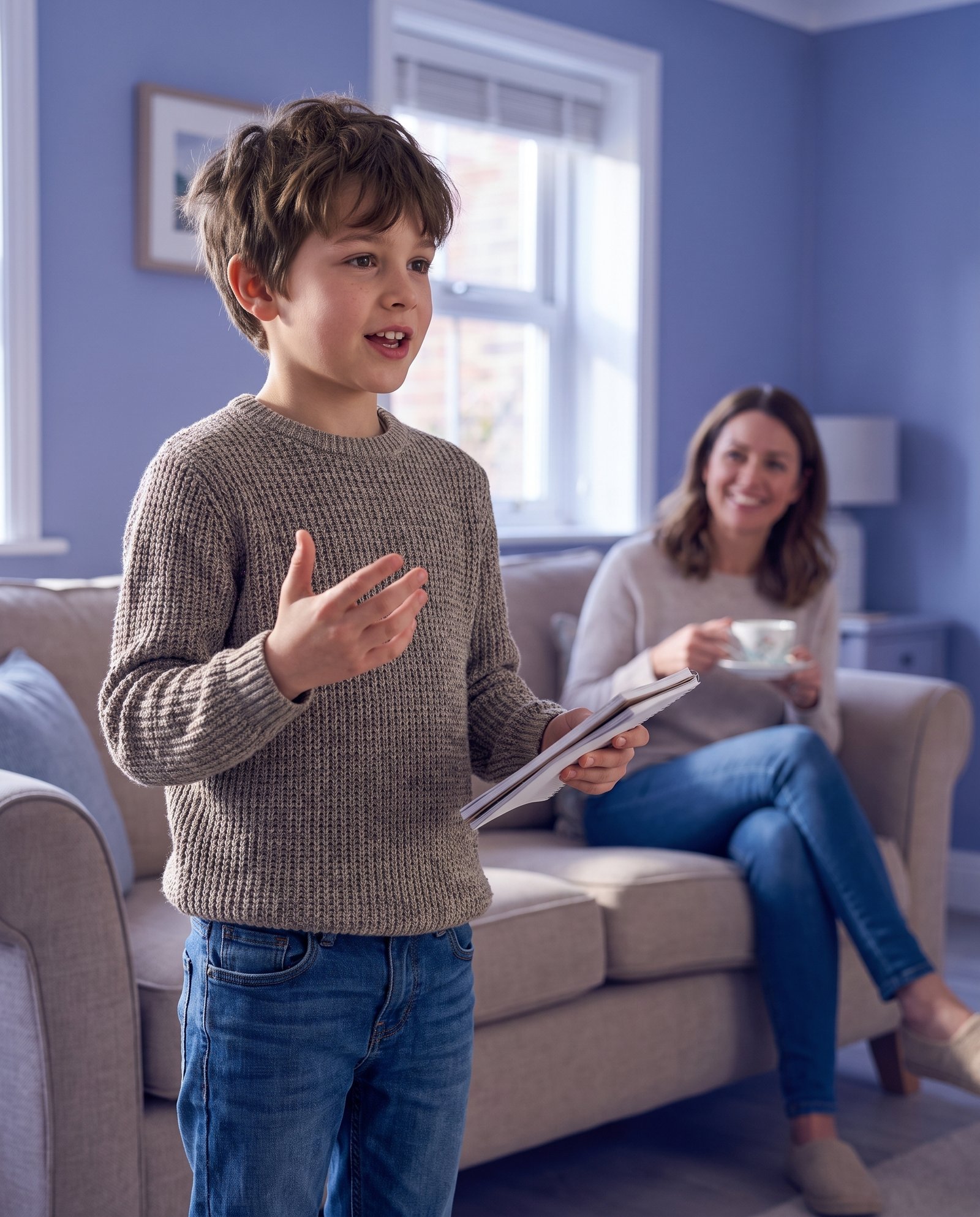
Ask your child to explain something they already understand well a video game, a school subject, a book they loved as if you’ve never heard of it before. Ask genuine follow-up questions as they go.
Why it works: This builds two skills at once: organizing information clearly, and thinking on their feet when questioned — which is exactly what happens during real presentations and Q&A moments.
4. Recorded Retell
Record a short video of your child telling a story about their day, a memory, anything then watch it back together. Ask them what they noticed, and only offer one small suggestion, not a full critique.
Why it works: Kids are almost always harder on themselves in their head than what actually shows up on camera. Watching the recording usually builds confidence rather than knocking it down, because they see they did better than they felt they did.
5. Family Dinner Presentations
Once a week, let your child “present” something at the dinner table a fact they learned, a story from school, an opinion on something. Keep it to under two minutes and treat it like a real mini-presentation, with everyone giving their full attention.
Why it works: This builds comfort with having an audience’s attention specifically, in the safest possible setting people who already love them.
How Often Should Kids Practice?
Consistency matters more than intensity. Ten focused minutes, two or three times a week, builds confidence faster than one long, dreaded practice session. Rotate through these five exercises so it stays varied and doesn’t start to feel like a chore.
When Home Practice Isn’t Quite Enough
These exercises build a strong foundation, but at some point, most kids benefit from practicing in front of people outside the family a room where the outcome actually matters a little, with real peers and real feedback. That’s usually the point where a structured program helps more than another round of home practice.
At The Future Leaders Club, our Public Speaking program (ages 7–16) gives kids exactly that: a small, supportive group setting where they can take these same skills further, with expert coaching and real practice in front of peers.
Frequently Asked Questions
How long should a public speaking practice session be for a young child? Five to ten minutes is plenty for most kids, especially younger ones. Short, frequent sessions build the habit without creating dread around practice time.
What if my child refuses to do these exercises? Start smaller than feels necessary even one sentence counts as a win. Forcing a full exercise before a child is ready can create more resistance. Let them build up gradually and always end on a positive note.
Do these exercises help shy kids specifically? Yes. These exercises work well for shy or introverted kids because they start in a low-pressure, familiar environment. The goal is to build the skill before asking a child to use it in a higher-stakes setting.
At what age can kids start practicing public speaking at home? Most kids can start simple versions of these exercises around age 6 or 7, once they’re comfortable stringing sentences together. The exercises can be adjusted in difficulty as they grow.
The Bottom Line
Public speaking confidence isn’t a personality trait some kids have and others don’t it’s a skill built through repetition, usually starting in the safest environment available: home. A few minutes a week, using exercises like these, can make a real difference before a child ever steps into a classroom or onto a stage.
Ready to take the next step? Explore our Public Speaking Program for ages 7–16, or contact us to learn more.